
Grace Hopper facts for kids
Grace Brewster Murray Hopper (1906–1992) was one of the most important figures in the history of computing. She was a mathematician, a United States Navy rear admiral, and a computer science pioneer whose work changed how we think about programming. Here are some fascinating facts about her life and contributions.
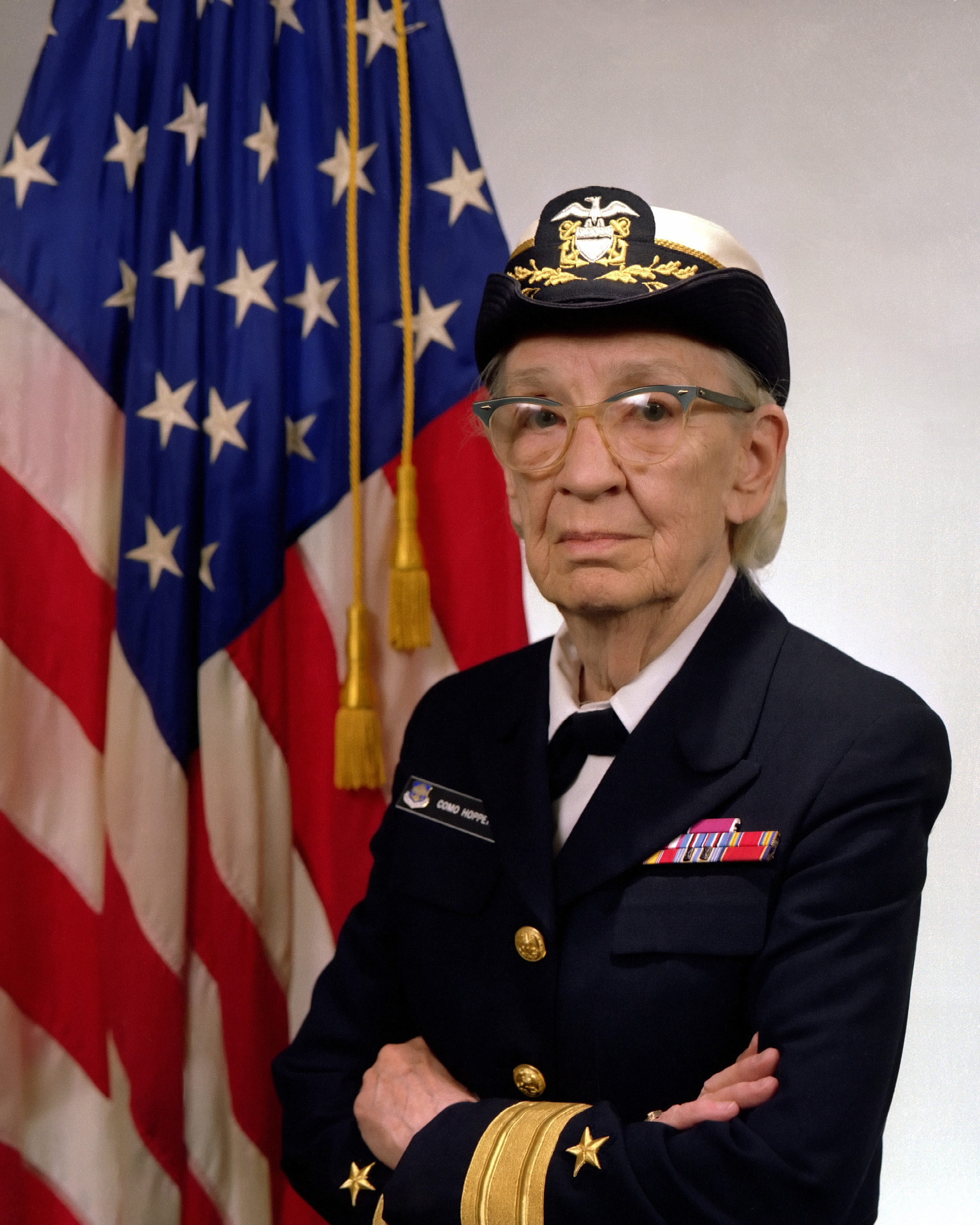
She was one of the first computer programmers
In 1944, Grace Hopper joined the Navy's computing project at Harvard University, where she became one of the first programmers of the Mark I — one of the earliest electromechanical computers in the United States. The Mark I was a massive machine, 51 feet long and 8 feet tall, and Hopper had to figure out how to give it instructions.
She wrote programs by feeding long strips of punched paper tape into the machine. Each hole in the tape represented an instruction. It was tedious, detail-oriented work, and Hopper loved it.
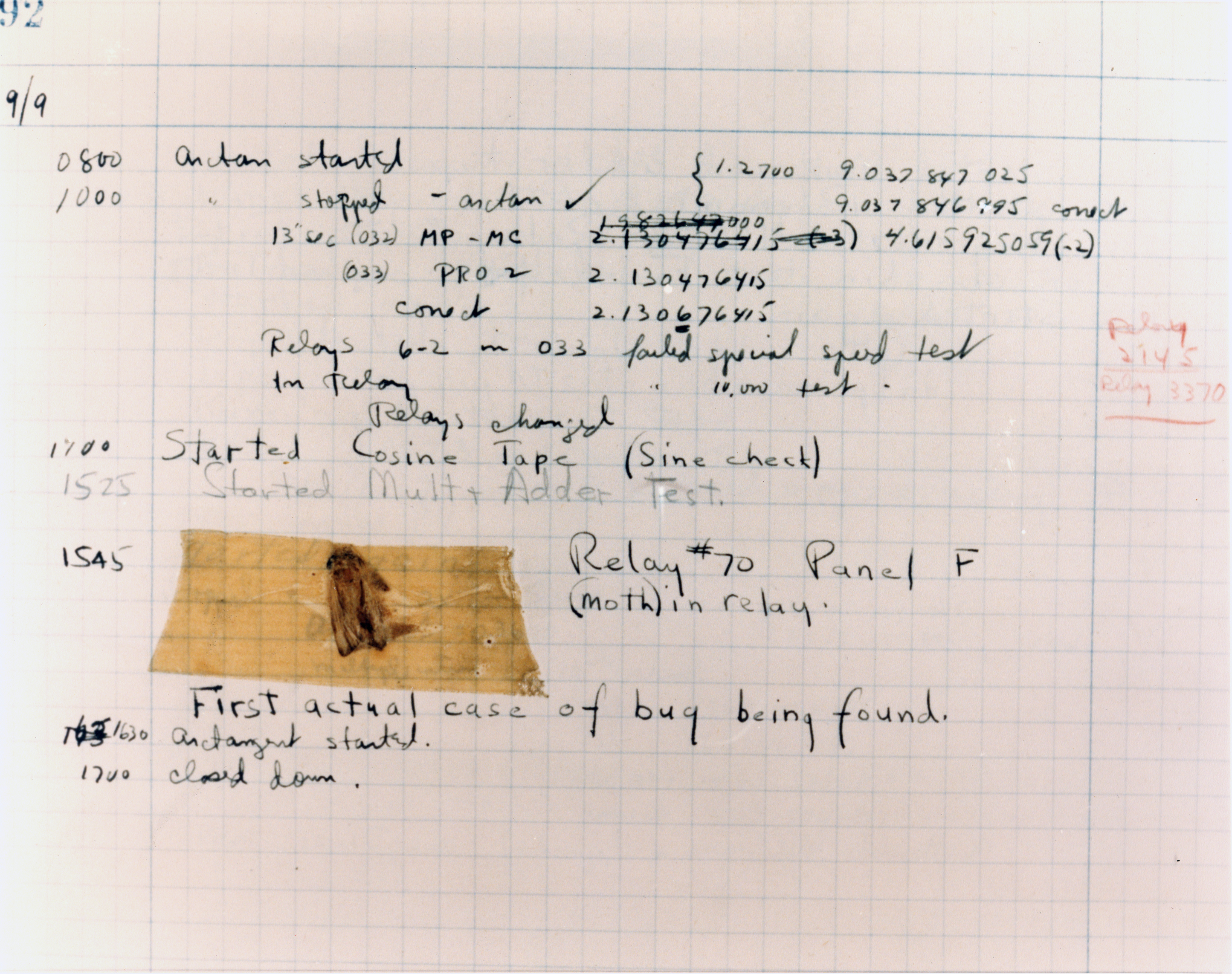
She found the first real computer "bug"
In 1947, while working on the Mark II computer at Harvard, Hopper's team discovered that a moth had gotten stuck inside one of the machine's electrical relays, causing it to malfunction. They carefully removed the moth and taped it into the computer's logbook with the note: "First actual case of bug being found."
While the word "bug" had already been used informally to describe technical problems, this incident popularized the terms "bug" and "debugging" in the world of computing. The original logbook page with the moth is now preserved at the Smithsonian National Museum of American History.
She invented the first compiler
In the early 1950s, Hopper had a revolutionary idea: what if programmers could write instructions in something closer to English instead of cryptic machine code? Most people thought this was impossible — computers only understood numbers, after all.
Hopper proved them wrong. In 1952, she created the first compiler — a program that translates human-readable code into machine code that a computer can execute. She called it the A-0 System.
This was a groundbreaking achievement. Before compilers, every program had to be written directly in machine language — long sequences of numbers that were extremely difficult to write, read, and debug. Hopper's compiler opened the door to modern programming languages that look much more like human language.
She helped create COBOL
Building on her compiler work, Hopper played a key role in developing COBOL (Common Business-Oriented Language) in 1959. COBOL was designed to be readable by non-specialists, using English-like statements such as ADD PRICE TO TOTAL.
COBOL became one of the most widely used programming languages in history, and it's still running in many banks, government agencies, and large corporations today — more than 60 years later! It is estimated that even today there are over 200 billion lines of COBOL code still in active use worldwide.
She served in the Navy until age 79
Hopper had an extraordinary military career. She first joined the Navy Reserve during World War II in 1943, at the age of 37. She tried to retire several times, but the Navy kept calling her back because her expertise was so valuable.
She finally retired in 1986 at the age of 79, making her one of the oldest active-duty officers in U.S. Navy history at the time. At her retirement ceremony, held aboard the USS Constitution (the oldest commissioned warship still afloat), she was awarded the Defense Distinguished Service Medal.
She was known as "Amazing Grace"
Hopper earned the nickname "Amazing Grace" for her extraordinary contributions to computing and her energetic personality. She was a gifted teacher and speaker who could explain complex concepts in simple, memorable ways.
One of her most famous teaching tools was a piece of wire about 30 centimeters long — the distance that light travels in one nanosecond (one billionth of a second). She would hand these "nanoseconds" out to audiences to help them understand why shorter communication distances matter in computing.
She also loved to say: "The most dangerous phrase in the language is: We've always done it this way."
She received the Presidential Medal of Freedom
In 2016, President Barack Obama posthumously awarded Grace Hopper the Presidential Medal of Freedom — the highest civilian honor in the United States. This recognized her lasting impact on computing and the military.
Fun facts
- Grace Hopper earned her Ph.D. in mathematics from Yale University in 1934, at a time when very few women pursued advanced degrees in math or science.
- The destroyer USS Hopper (DDG-70) was named in her honor. It's nicknamed "Amazing Grace."
- Every year, the Grace Hopper Celebration is held — it's the world's largest gathering of women in computing, attended by thousands of technologists.
- She appeared on the Late Show with David Letterman in 1986, where she charmed the audience with her wit and her nanosecond wire.
Her legacy
Grace Hopper's vision of making computers accessible to more people — by making programming languages more human-friendly — is the foundation of modern software development. Every time you write code in JavaScript, Python, or any other high-level language, you're building on the path she pioneered.
She once said: "I've always been more interested in the future than in the past." Thanks to her work, the future of computing has been brighter for everyone.
Read more blog articles Browse JavaScript projectsAbout codeguppy
CodeGuppy is a FREE coding platform for schools and independent learners. If you don't have yet an account with codeguppy.com, you can start by visiting the registration page and sign-up for a free account. Registered users can access tons of fun projects!
Follow @codeguppy on Twitter for coding tips and news about codeguppy platform. For more information, please feel free to contact us.